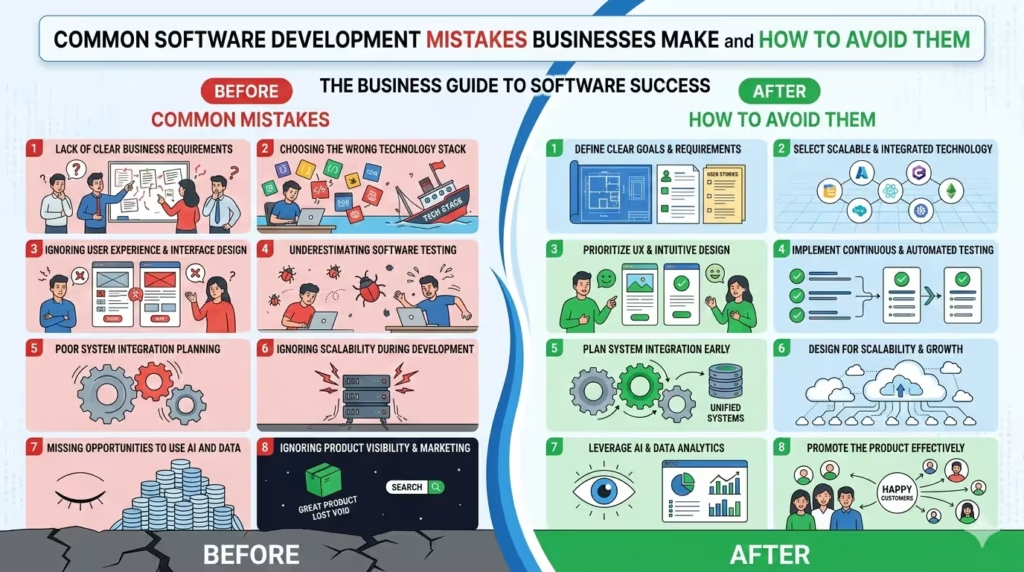
Many software projects fail due to unclear requirements, poor technology choices, weak testing strategies, and lack of scalability planning. Businesses can avoid these mistakes by following structured development processes, prioritizing user experience, implementing continuous testing, and working with experienced software development companies such as Bytexus.
Introduction to Common Software Development Mistakes
Software development has become a core driver of digital transformation for businesses across industries. Organizations now rely on web applications, mobile platforms, cloud systems, and data-driven software to automate operations, improve customer experiences, and scale their services globally.
However, building successful software is not always straightforward. Many projects experience delays, budget overruns, or fail to meet business objectives. In most cases, the problem is not the technology itself but mistakes made during planning, development, or implementation.
Common issues such as unclear project requirements, choosing the wrong technology stack, weak testing strategies, and ignoring scalability can quickly turn a promising project into a costly challenge.
Understanding these risks early helps businesses make better development decisions and build reliable, scalable software systems that support long-term growth.
In this guide, we will explore the most common software development mistakes businesses make and practical strategies to avoid them.
Key Takeaways
Businesses often face challenges in software development because of avoidable mistakes during planning, architecture, and implementation. Identifying these risks early can significantly improve the chances of building reliable and scalable digital products.
Key lessons businesses should remember include:
- Clearly define business requirements and project goals before development begins.
- Choose a technology stack that supports long-term scalability, security, and integration.
- Prioritize user experience and intuitive interface design to improve product adoption.
- Implement continuous testing and quality assurance throughout the development lifecycle.
- Plan system integrations carefully to avoid disconnected tools and inconsistent data.
- Design software architecture with scalability and cloud infrastructure in mind.
- Use data analytics and intelligent automation to improve operational efficiency.
- Work with experienced software development teams that follow structured development processes.
By following these best practices, businesses can reduce development risks and build software solutions that support operational efficiency, customer engagement, and long-term digital growth.
Lack of Clear Business Requirements
One of the most common reasons software projects struggle is the absence of clearly defined business requirements. When development begins without a structured understanding of goals, workflows, and system expectations, teams often face confusion about what the final product should deliver.
Software projects typically involve multiple stakeholders, including business teams, developers, designers, and project managers. Without clear documentation of requirements, each group may interpret project goals differently, leading to misalignment during development.
Why Businesses Make This Software Development Mistake
Many organizations rush into development without completing a proper discovery and planning phase. Stakeholders may have general ideas about the product but lack detailed documentation of features, user workflows, and system integrations.
In some cases, requirements evolve during development because the business strategy was not fully defined at the beginning.
Problems This Mistake Creates for Businesses
When business requirements are unclear, several challenges can arise:
- Frequent changes to product features during development
- Miscommunication between business teams and developers
- Project scope expansion and delays
- Increased development costs and resource waste
- Final software that does not fully meet business objectives
How Businesses Can Avoid This Software Development Mistake
Successful software projects begin with a structured discovery and planning process. Businesses should clearly define project goals, user journeys, system architecture, and integration requirements before development starts.
Creating detailed documentation such as product requirement documents, user stories, and workflow diagrams helps development teams understand exactly what needs to be built.
Working with experienced software development teams can also help translate business goals into practical technical solutions and ensure the project follows a well-defined development roadmap.
Choosing the Wrong Technology Stack
Selecting the right technology stack is a critical decision in any software development project. The technology stack determines how the application will be built, how it performs, and how easily it can scale as the business grows.
When businesses choose technologies without properly evaluating project requirements, scalability needs, and integration capabilities, it can create long-term technical challenges that are difficult and expensive to resolve.
A well-chosen technology stack ensures that software remains secure, maintainable, and adaptable as business needs evolve.
Why Businesses Make This Software Development Mistake
Companies sometimes select technologies based on short-term trends, developer familiarity, or marketing hype rather than the actual needs of the project.
In other cases, businesses may not fully evaluate factors such as system architecture, performance requirements, future scalability, or compatibility with existing systems.
Without proper technical planning, the chosen technology stack may not support long-term growth or complex integrations.
Problems This Mistake Creates for Businesses
Choosing the wrong technology stack can lead to several operational and technical challenges:
- Limited system scalability as user demand increases
- Integration issues with existing platforms or third-party tools
- Higher maintenance and development costs over time
- Reduced application performance and reliability
- Difficulty adding new features or expanding system capabilities
How Businesses Can Avoid This Software Development Mistake
Selecting the right technology stack requires careful evaluation of both current requirements and long-term business goals.
Businesses should consider factors such as system scalability, security, integration capabilities, infrastructure requirements, and development efficiency before finalizing technology decisions.
A structured architecture planning process and collaboration with experienced software architects can help ensure that the selected technologies support long-term performance, scalability, and main
Ignoring User Experience and Interface Design
User experience and interface design play a critical role in the success of modern software applications. Even if a system has powerful features and advanced functionality, users may struggle to adopt it if the interface is confusing or difficult to navigate.
Software is ultimately built for people to use. If users cannot easily understand how to perform tasks, access information, or complete workflows, the product may fail to deliver its intended value.
A well-designed user interface improves usability, reduces learning time, and increases overall user satisfaction.
Why Businesses Make This Software Development Mistake
Many organizations focus heavily on functionality and technical capabilities during development while giving less attention to design and usability.
In some cases, businesses assume users will adapt to complex systems. As a result, interface design and usability testing are often treated as secondary priorities instead of essential parts of the development process.
Without proper user research and design planning, software products may lack intuitive navigation and clear user workflows.
Problems This Mistake Creates for Businesses
Ignoring user experience can create several challenges for both businesses and users:
- Confusing navigation and complex user interfaces
- Poor user engagement and reduced product adoption
- Increased customer support and training requirements
- Frustrated users and lower satisfaction levels
- Higher risk of customers switching to competing products
How Businesses Can Avoid This Software Development Mistake
User experience should be integrated into the software development process from the beginning. This includes conducting user research, designing clear interface structures, and testing usability throughout development.
Techniques such as wireframing, prototyping, and user testing help ensure that software systems are intuitive and easy to use.
When design and usability are prioritized alongside functionality, businesses can create digital products that are both powerful and user-friendly.
Underestimating Software Testing
Software testing is a critical part of the development process that ensures applications function correctly, perform reliably, and remain secure under different conditions. When testing is overlooked or minimized, even well-developed software can experience serious performance issues after launch.
Many software problems such as application crashes, slow performance, or security vulnerabilities occur because testing was not properly integrated into the development lifecycle.
Testing helps identify and resolve issues early, allowing development teams to deliver stable and reliable software systems.
Why Businesses Make This Software Development Mistake
Some organizations treat testing as a final step that takes place only after development is complete. Under tight deadlines or budget constraints, testing phases may be shortened or skipped entirely.
In other situations, businesses may underestimate the complexity of testing modern software systems that operate across multiple devices, platforms, and user environments.
Without continuous testing throughout development, many issues remain undetected until the software is already in production.
Problems This Mistake Creates for Businesses
Insufficient testing can lead to serious operational and technical problems:
- Application crashes and unexpected system failures
- Performance issues during high user activity
- Security vulnerabilities that expose sensitive data
- Poor user experience due to bugs or broken features
- Increased maintenance costs after product launch
How Businesses Can Avoid This Software Development Mistake
Testing should be integrated throughout the entire software development lifecycle rather than being treated as a final stage.
Development teams should implement a structured testing strategy that includes multiple testing methods such as unit testing, integration testing, performance testing, and security testing.
Automated testing tools and continuous quality assurance processes can also help teams identify and fix issues early, improving overall software reliability and performance.
Poor System Integration Planning
Modern businesses rely on multiple digital systems to manage operations, including customer relationship management platforms, financial systems, supply chain tools, and communication platforms. When these systems are not properly integrated, they often operate independently and create inefficiencies across the organization.
Without effective integration, data cannot flow smoothly between applications. This can lead to manual work, inconsistent information, and operational delays.
Proper system integration ensures that different platforms communicate with each other, allowing businesses to streamline workflows and maintain accurate data across systems.
Why Businesses Make This Software Development Mistake
Organizations sometimes implement new software systems without carefully considering how they will interact with existing platforms. Each system may be designed independently, without a clear integration strategy.
In some cases, businesses adopt new tools quickly to solve immediate problems but overlook the long-term need for seamless data exchange between systems.
Without planning integrations early in the development process, connecting systems later can become complex and costly.
Problems This Mistake Creates for Businesses
Poor system integration can create several operational challenges:
- Duplicate data entry across multiple platforms
- Disconnected workflows between departments
- Inconsistent or outdated data across systems
- Reduced operational efficiency and slower decision making
- Higher maintenance and administrative effort
How Businesses Can Avoid This Software Development Mistake
Businesses should plan system integrations during the early stages of software development. Designing applications with integration capabilities ensures that new systems can communicate with existing tools.
Using application programming interfaces (APIs) and standardized integration frameworks allows platforms to share data in real time. This helps organizations create a unified digital ecosystem where information flows seamlessly across systems.
A well-planned integration strategy improves efficiency, reduces manual work, and supports better decision-making across the business.
Ignoring Scalability During Development
Scalability is the ability of a software system to handle increasing numbers of users, transactions, or data without affecting performance. Many software applications are built only to meet current business needs, but they struggle when demand grows.
As businesses expand, their software must support more users, larger datasets, and more complex operations. If scalability is not considered during development, the system may experience performance issues, slow response times, or infrastructure limitations.
Designing software with scalability in mind helps ensure that applications can grow alongside the business.
Why Businesses Make This Software Development Mistake
Some organizations focus primarily on short-term requirements when developing software. The system is designed to solve immediate operational problems without considering how usage might grow in the future.
In other cases, limited infrastructure planning or lack of scalable architecture can prevent the system from supporting higher workloads.
Without proper scalability planning, even well-built applications can face performance bottlenecks as demand increases.
Problems This Mistake Creates for Businesses
Ignoring scalability during development can lead to several challenges:
- Slow application performance as user traffic increases
- System downtime during periods of high demand
- Difficulty adding new features or expanding functionality
- Higher costs when systems require major upgrades or redevelopment
- Reduced user satisfaction due to performance issues
How Businesses Can Avoid This Software Development Mistake
Scalable software architecture should be planned from the beginning of the development process. Designing modular systems allows applications to grow without requiring major structural changes.
Modern infrastructure solutions such as cloud platforms and distributed systems can help businesses scale resources based on demand. This allows applications to handle increasing workloads while maintaining consistent performance.
By prioritizing scalability early, businesses can build software systems that remain reliable and efficient as their operations expand.
Missing Opportunities to Use AI and Data
Modern businesses generate large amounts of data through digital systems, customer interactions, and operational processes. However, many organizations fail to use this data effectively to improve decision-making, automate workflows, or gain valuable insights.
Software systems that lack analytics capabilities or intelligent automation may limit the organization’s ability to identify trends, optimize operations, and respond quickly to changing business conditions.
By leveraging data and artificial intelligence, businesses can transform software applications into powerful decision-support tools that improve efficiency and productivity.
Why Businesses Make This Software Development Mistake
Some organizations rely on traditional software systems that focus mainly on basic functionality without incorporating analytics or intelligent automation.
In other cases, businesses collect large volumes of operational data but lack the infrastructure or expertise needed to analyze it effectively. Without proper data strategies, valuable insights remain unused.
As a result, companies may miss opportunities to automate processes, improve forecasting, or enhance customer experiences.
Problems This Mistake Creates for Businesses
Failing to use data and AI capabilities can create several limitations:
- Limited insights from operational and customer data
- Manual decision-making processes that slow down operations
- Inefficient workflows that could otherwise be automated
- Difficulty identifying trends, risks, or growth opportunities
- Reduced competitiveness in data-driven markets
How Businesses Can Avoid This Software Development Mistake
Businesses should design software systems that support data collection, analytics, and intelligent automation. Integrating analytics tools allows organizations to monitor performance, track trends, and generate actionable insights.
Artificial intelligence and machine learning technologies can further enhance software applications by enabling predictive analytics, automated workflows, and intelligent decision support.
By incorporating data-driven capabilities into software systems, businesses can unlock valuable insights and improve operational efficiency.
Conclusion
Software development plays a crucial role in how modern businesses operate, compete, and grow in a digital-first economy. From internal business systems to customer-facing applications, reliable software helps organizations streamline operations, improve efficiency, and deliver better user experiences.
However, building successful software requires more than technical expertise. Many projects struggle because of avoidable mistakes such as unclear requirements, poor technology decisions, weak testing processes, lack of scalability planning, and ineffective system integration.
By identifying these risks early and following structured development practices, businesses can significantly improve the success rate of their software projects. Clear planning, scalable architecture, continuous testing, and user-focused design are essential for building stable and future-ready applications.
Organizations that invest in modern technologies, intelligent automation, and scalable infrastructure are better positioned to adapt to changing market demands and achieve long-term digital growth.
Bytexus supports businesses throughout this journey by helping organizations design and develop secure, scalable software solutions tailored to their operational needs. With expertise across web development, mobile applications, cloud platforms, artificial intelligence, system integration, and quality assurance, Bytexus helps businesses transform ideas into reliable digital products that drive real business value.
Frequently Asked Questions
What are the most common software development mistakes businesses make?
Some of the most common software development mistakes include unclear project requirements, choosing the wrong technology stack, ignoring user experience, insufficient software testing, poor system integration planning, and failing to design scalable systems. These issues can lead to delays, increased costs, and unstable applications.
Why do many software development projects fail?
Software development projects often fail because of poor planning, weak communication between stakeholders and developers, unrealistic timelines, and lack of testing. Without a clear strategy and structured development process, projects may struggle to deliver expected results.
How can businesses avoid software development mistakes?
Businesses can avoid development mistakes by defining clear project requirements, selecting scalable technologies, prioritizing user experience, conducting regular testing, and ensuring proper system integrations. Working with experienced development teams can also significantly reduce project risks.
Why is planning important in software development?
Planning helps define project goals, user requirements, technical architecture, and development timelines. A well-planned software project reduces confusion during development and improves the chances of delivering a successful digital product.
What role does user experience play in software development?
User experience determines how easily customers can interact with a digital product. Software that is intuitive, responsive, and easy to navigate improves user satisfaction, increases adoption rates, and enhances overall product success.
Why is software testing important before launching an application?
Software testing ensures that applications function correctly, remain secure, and perform reliably across different devices and environments. Proper testing helps identify bugs, performance issues, and security vulnerabilities before a product goes live.
What is scalability in software development?
Scalability refers to the ability of a software system to handle increasing numbers of users, transactions, or data without affecting performance. Scalable software allows businesses to grow without rebuilding their entire system.
How do system integrations improve business operations?
System integrations connect different applications and platforms so they can share data and automate workflows. This improves operational efficiency, reduces manual work, and provides better visibility into business processes.
Can artificial intelligence improve modern software applications?
Yes. Artificial intelligence can help businesses automate processes, analyze large datasets, predict trends, and enhance decision-making. AI-powered software systems can improve efficiency and provide valuable insights for organizations.
Why should businesses work with experienced software development companies?
Experienced software development companies bring technical expertise, industry knowledge, and structured development processes. They help businesses avoid common development mistakes and build scalable, secure, and high-performing digital solutions.