Introduction
Custom Web Apps vs SaaS-Modern businesses are scaling faster than ever, but the tools they rely on often struggle to keep up.
Many organizations start with SaaS platforms because of their quick setup and low upfront cost. However, as operations grow, these tools begin to limit customization, integrations, and performance.
Custom web applications solve this challenge by giving businesses full control over workflows, systems, and scalability. Unlike standardized SaaS tools, they are built around specific business needs, enabling better efficiency and long-term growth.
At Bytexus, with over a decade of experience building scalable systems across industries like FinTech Software Development Services, Healthcare IT Software Solutions, and Transportation and Logistics Software Solutions, we have seen that businesses investing in custom applications achieve stronger scalability and better ROI.
This blog explains the key differences between SaaS tools and custom web applications and helps you choose the right approach for scaling your business.
Key Takeaways
- Custom web applications scale faster because they are built around specific business workflows, allowing companies to operate efficiently without adjusting their processes to fit software limitations.
- SaaS tools are useful for quick setup and early-stage growth, but as business complexity increases, their predefined features and limited flexibility start creating operational constraints.
- Custom solutions provide greater flexibility, seamless integrations, and full control over systems, enabling businesses to connect multiple tools, automate workflows, and improve overall efficiency.
- While SaaS tools involve recurring subscription costs that increase over time, custom web applications offer better long-term ROI by reducing dependency on multiple platforms and optimizing operations.
- Businesses focused on scalability, performance, and long-term growth benefit more from custom web applications, as they provide a strong and adaptable foundation for evolving business needs.
What Are SaaS Tools?
Software as a Service (SaaS) tools are cloud-based applications that users can access through a web browser without installing or maintaining software locally.
These platforms operate on a subscription model and are designed to serve a broad range of users with standardized features and workflows.
SaaS tools allow businesses to quickly adopt software solutions without development effort. However, they are built for general use cases, which can limit flexibility as business requirements become more complex.
What Are Custom Web Applications?
Custom web applications are software solutions built specifically to match a business’s workflows, processes, and operational needs.
Unlike SaaS tools, which offer standardized features for a broad audience, custom applications are designed from the ground up to align with how a business actually operates. Every feature and integration is tailored to support specific goals.
These applications are developed through a structured process, ensuring scalability, reliability, and flexibility as the business grows.
For organizations that need control, adaptability, and long-term scalability, custom web applications provide a system that evolves with their operations.
Key Scaling Challenges Businesses Face with SaaS Tools
SaaS tools work well in the early stages, but as businesses scale, operations become more complex and interconnected. At this point, these tools often struggle to keep up, creating limitations in flexibility, integrations, cost efficiency, and performance.
Limited Customization for Business-Specific Workflows
SaaS platforms are built on predefined structures that cannot fully adapt to unique business processes. As companies grow, teams often have to adjust their workflows to fit the software rather than optimizing systems around their actual needs, leading to inefficiencies and unnecessary manual effort.
Increasing Costs with Business Growth
Although SaaS tools start with low upfront costs, expenses increase significantly as businesses expand. Adding users, accessing advanced features, and relying on multiple tools across departments gradually raises operational costs without delivering proportional flexibility or control.
Integration Challenges and Data Silos
As organizations grow, they rely on multiple tools to manage different functions. However, SaaS platforms often struggle to integrate seamlessly, resulting in disconnected systems, inconsistent data, and delayed decision-making due to lack of real-time visibility.
Limited Data Control and Compliance Risks
In SaaS environments, data is managed by external vendors, which reduces direct control over how it is accessed, stored, and used. For businesses handling sensitive or regulated data, this dependency can introduce compliance challenges and increase security risks.
Performance Constraints at Scale
As user activity and data volume increase, SaaS platforms may struggle to maintain consistent performance. This can lead to slower response times and reduced system efficiency, directly affecting productivity and user experience.
How Custom Web Applications Enable Faster Business Scaling
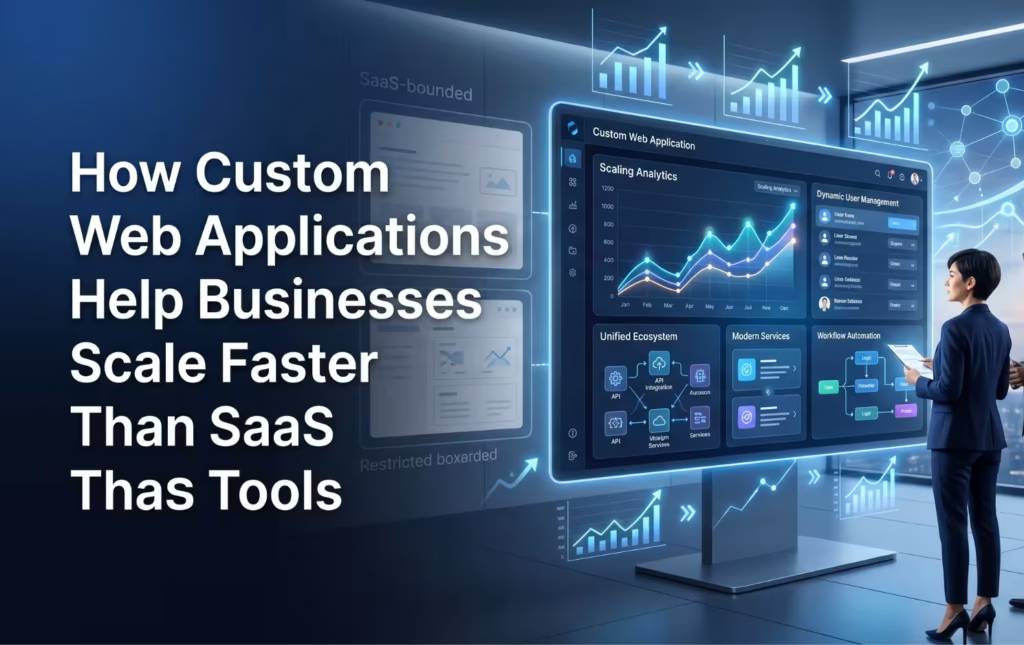
Custom web applications are designed to grow with your business, not limit it. Unlike SaaS tools that operate within predefined boundaries, custom solutions are built around your workflows, allowing you to scale operations without friction.
Align with Your Business Workflows
Custom web applications are developed based on how your business actually operates. This ensures that every feature supports real processes, reducing inefficiencies and eliminating the need for manual workarounds.
As a result, teams can focus on execution rather than adjusting to software limitations.
Offer Scalable Architecture Without Limits
Custom applications are built on scalable and modular architecture using modern Cloud Application Development Services allowing systems to handle increasing users, data, and system complexity efficiently without performance issues. Businesses can expand features and operations without being restricted by vendor limitations.
Enable Seamless System Integrations
Custom web applications integrate smoothly with existing systems through System Integration Services, connecting platforms such as CRM, ERP, payment gateways, and analytics tools. This creates a unified ecosystem where data flows in real time, improving visibility and decision-making.
Deliver Better Long-Term Cost Efficiency
While custom development requires an initial investment, it eliminates recurring subscription costs associated with SaaS tools. Over time, businesses benefit from better cost control and stronger return on investment.
Provide Full Control Over Data and Security
Custom applications give businesses complete control over their data, infrastructure, and security measures. This allows organizations to implement compliance standards and protect sensitive information without relying on external vendors.
Custom Web Applications vs SaaS Tools: What’s the Difference?
The core difference between SaaS tools and custom web applications lies in flexibility, control, and scalability. SaaS platforms are designed for a broad audience with standardized features, while custom applications are built specifically for a single business with tailored functionality.
SaaS vs Custom Web Applications Comparison
| Aspect | SaaS Tools | Custom Web Applications |
| Flexibility | Limited to predefined features | Fully customizable |
| Scalability | Restricted by platform limits | Highly scalable |
| Cost | Recurring subscription | Long-term ROI |
| Integration | Limited and tool-dependent | Seamless and unified |
| Data Control | Vendor-controlled | Full ownership |
| Performance | Shared infrastructure | Optimized for use case |
Which Option Is Better for Scaling Businesses?
SaaS tools are effective for quick setup and basic needs, especially in early-stage businesses. However, as operations grow and become more complex, their limitations become more noticeable.
Custom web applications provide greater flexibility, scalability, and control, making them a more suitable choice for businesses focused on long-term growth and operational efficiency.
Businesses can further enhance efficiency by integrating automation through AI & ML Development Services, enabling smarter decision-making and predictive capabilities.
Real-World Use Cases
As businesses scale and operations become more complex, real-world implementation highlights the limitations of SaaS tools. Custom web applications provide solutions tailored to industry-specific challenges, enabling better performance, integration, and control.
Logistics and Transportation Systems
Logistics businesses require real-time coordination across dispatch, tracking, fleet management, and billing. SaaS tools often struggle to unify these operations effectively.
Custom web applications allow companies to build centralized systems that integrate all these functions, improving operational visibility and enabling faster, data-driven decisions.
FinTech Platforms
FinTech companies operate with complex financial workflows, strict regulatory requirements, and high transaction volumes. Standard SaaS tools often lack the flexibility to support such specialized needs.
Custom web applications enable secure and scalable platforms with advanced integrations and compliance-ready architecture tailored to specific financial models.
Healthcare Systems
Healthcare organizations require secure systems to manage patient data, workflows, and regulatory compliance. SaaS tools often fall short in handling these requirements effectively.
Custom web applications provide tailored solutions that ensure data security, compliance, and efficient operational workflows.
Enterprise Dashboards and Analytics
Large organizations depend on real-time data from multiple systems for decision-making. SaaS tools often provide fragmented insights across platforms.
Custom dashboards consolidate data into a single interface, enabling faster insights, better reporting, and improved strategic decisions.
When Should You Choose Custom Web Applications Over SaaS?
Choosing between SaaS tools and custom web applications depends on how complex your operations are and how fast you plan to scale. While SaaS works for initial growth, businesses often reach a point where standard tools can no longer support their requirements.
When SaaS Tools Start Limiting Your Workflows
If your team frequently adjusts processes to fit the software instead of the software supporting your processes, it’s a clear sign that SaaS tools are no longer sufficient.
At this stage, inefficiencies increase and productivity begins to decline.
When Integration Between Systems Becomes Complex
As businesses grow, they rely on multiple tools across departments. If these tools fail to integrate smoothly, it leads to data silos and delays in decision-making.
Custom web applications help unify systems and create a connected ecosystem.
When Costs Continue to Increase Without Added Value
If subscription costs keep rising with more users and features but do not provide proportional flexibility or efficiency, it becomes difficult to justify long-term investment in SaaS tools.
Custom applications offer better cost control over time.
When You Need Greater Control Over Data and Security
Businesses handling sensitive or regulated data require full control over access, storage, and compliance. SaaS platforms often limit this control.
Custom web applications allow businesses to implement their own security standards and compliance frameworks.
When You Are Focused on Long-Term Scalability
If your goal is to scale operations, expand services, or build a long-term digital ecosystem, custom web applications provide the flexibility and foundation needed for sustainable growth.
Why Choose Bytexus for Scalable Custom Web Application Development
Choosing custom web application development is only part of the decision. The real impact comes from working with a technology partner that understands scalability, performance, and long-term system reliability.
Built Around Real Business Requirements
Bytexus focuses on building custom web applications that align with actual business workflows rather than generic templates. This ensures that every solution is practical, efficient, and scalable from day one.
Proven Experience That Drives Results
With 12+ years of experience and a team of 30+ skilled developers, Bytexus has successfully delivered solutions to 135+ global clients across multiple industries.
This experience enables the team to understand complex requirements, design scalable architectures, and deliver systems that support real business growth.
Architecture-First Approach for Scalability
Every application is designed with scalability, security, and performance in mind. Bytexus follows a structured development approach that includes system architecture planning, controlled development cycles, and continuous testing.
Security, Compliance, and Reliability
Bytexus follows industry standards such as GDPR, HIPAA, SOC 2, and ISO-certified processes, ensuring applications are secure, compliant, and reliable.
End-to-End Development and Growth Support
From strategy to deployment and ongoing optimization, Bytexus supports the complete software lifecycle, helping businesses scale without technology limitations.
Ready to Scale Your Business?
If your current tools are limiting growth, it may be time to move beyond SaaS constraints.
👉 Schedule a Free Consultation with Bytexus and discover how custom web applications can accelerate your business growth.
Conclusion
SaaS tools are effective for quick setup and early-stage operations, but as businesses grow, their limitations in flexibility, integrations, and performance become more evident.
Custom web applications provide a scalable and adaptable foundation that aligns with business workflows. They allow organizations to integrate systems seamlessly, maintain full control over data, and continuously evolve their technology without restrictions.
For businesses focused on long-term growth, efficiency, and competitive advantage, custom web applications are not just an alternative to SaaS tools—they are a strategic investment.
Frequently Asked Questions
What is the main difference between SaaS tools and custom web applications?
SaaS tools provide standardized features designed for a wide range of users, while custom web applications are built specifically for a business. Custom solutions offer greater flexibility, better scalability, and full control over data and integrations.
Are custom web applications more expensive than SaaS tools?
Custom web applications require a higher upfront investment, but they reduce long-term costs by eliminating recurring subscription fees and improving operational efficiency, resulting in better return on investment over time.
Can SaaS tools support business scaling?
SaaS tools can support early-stage growth, but as business complexity increases, they often create limitations in customization, integrations, and performance, which can slow down scalability.
How long does it take to build a custom web application?
The development timeline depends on the complexity of the project. Simple applications may take a few months, while more advanced or enterprise-level systems require longer development cycles.
Are custom web applications secure?
Custom web applications can be highly secure when built with proper architecture, security practices, and compliance standards. They also provide full control over data access and protection.
When should a business switch from SaaS to custom applications?
A business should consider switching when SaaS tools start limiting workflows, integration becomes complex, costs increase significantly, or scalability becomes a challenge.