Introduction:
Modern software is more powerful than ever, but it is also more vulnerable. As businesses adopt cloud platforms, APIs, AI-driven systems, and mobile applications, the attack surface expands rapidly. This makes Software Security and Compliance a critical requirement for modern applications.
Cyberattacks are no longer rare. According to IBM, the average cost of a data breach reached $4.45 million globally, highlighting the real financial impact of poor security practices.
At the same time, governments and regulatory bodies are tightening data protection laws. Businesses are now responsible not just for building custom web applications, but for ensuring it is secure and compliant from day one, but for ensuring it is secure and compliant from day one.
Ignoring security and compliance is no longer optional. It directly impacts revenue, customer trust, and long-term growth.
Key Takeaways
- Security and compliance must be integrated from the start of software development
- Data breaches can cost businesses millions and damage long-term trust
- DevSecOps enables continuous security without slowing development
- Compliance frameworks like GDPR, HIPAA, and SOC 2 are essential
- Ignoring security leads to financial, legal, and reputational risks
What Is Software Security and Compliance?
In simple terms, security protects software, while compliance ensures it meets legal and regulatory standards.
Software security focuses on protecting applications from vulnerabilities, threats, and unauthorized access. This includes secure coding, encryption, testing, and continuous monitoring.
Compliance in software development ensures adherence to data protection laws and industry regulations. It defines how data is stored, processed, and shared.
Together, they form the foundation of reliable and trustworthy software systems.
Why Security and Compliance Can’t Be an Afterthought
Rising Cyber Threats
Attackers are using automation and AI to identify vulnerabilities faster than ever. Applications that lack built-in security become easy targets for exploitation.
This highlights the growing importance of Software Security and Compliance in modern systems.
Regulatory Pressure
Frameworks like GDPR, HIPAA, and SOC 2 require strict handling of sensitive data. Non-compliance can result in heavy penalties and legal consequences.
Financial and Reputation Risks
A single breach can cost millions and permanently damage customer trust. Recovery is often more expensive than prevention.
Integrating security early reduces risk, lowers costs, and improves system reliability.
Key Compliance Standards in Software Development
Compliance in software development varies by industry, but some frameworks are widely adopted:
- GDPR – Governs personal data protection and requires strict consent, storage, and processing policies
- HIPAA – Ensures confidentiality and security of sensitive healthcare data
- SOC 2 – Focuses on security, availability, processing integrity, and data privacy
- PCI DSS – Protects FinTech payment systems and financial transaction data from breaches
These standards define strict rules for data storage, access, and processing. Aligning software architecture with these frameworks ensures both compliance and user trust.
What Is DevSecOps and Why It Matters
DevSecOps integrates security into every stage of the software development lifecycle, making it a shared responsibility across development, operations, and security teams.
Instead of adding security at the end, it is built into development, testing, and deployment processes. This shift allows teams to identify and address risks earlier, when they are easier and less expensive to fix.
With DevSecOps, teams can:
- Detect vulnerabilities early in development
- Automate security checks and software testing within CI/CD pipelines
- Ensure systems consistently meet evolving regulatory and security requirements throughout the development lifecycle
By embedding security from the start, DevSecOps improves both delivery speed and overall system reliability without creating bottlenecks.
DevSecOps helps ensure Software Security and Compliance across the entire development lifecycle.
Best Practices for Secure and Compliant Software Development
Building secure and compliant software requires a structured and proactive approach across the entire lifecycle.
Key application security best practices include:
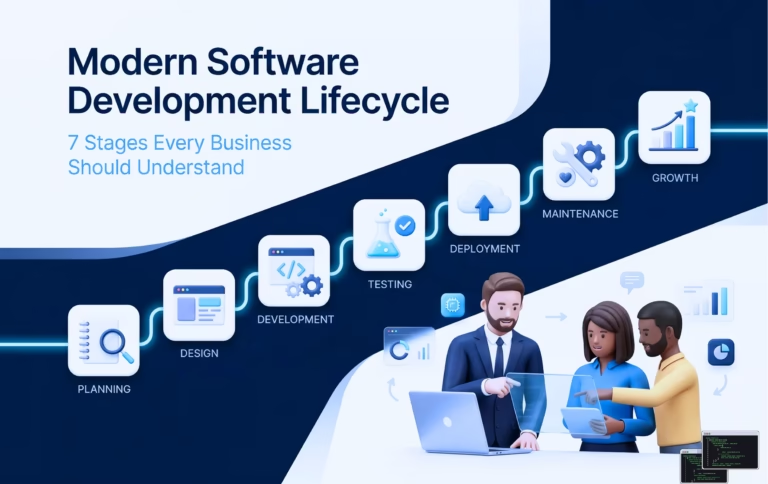
- Adopt a structured development approach where security is built into every stage, from initial design to deployment
- Limit system access based on user roles and responsibilities to reduce unauthorized exposure
- Secure APIs using authentication and rate limiting
- Encrypt sensitive data both in transit and at rest
- Conduct regular vulnerability assessments and penetration testing
- Maintain continuous monitoring and logging for threat detection
- Keep dependencies and frameworks updated to avoid known vulnerabilities
- Perform threat modeling during the design phase
Application security best practices must evolve continuously with new threats and compliance requirements.
Common Mistakes Companies Make
Many organizations expose themselves to risk due to avoidable security and compliance gaps.
Common mistakes include:
- Delaying security implementation until late stages of development
- Misunderstanding or ignoring compliance requirements
- Using outdated libraries or third-party components with known vulnerabilities
- Implementing weak authentication or access controls
- Failing to conduct regular security audits and monitoring
These issues often go unnoticed initially but create vulnerabilities that can be exploited over time. Addressing them early significantly reduces risk exposure.
How Bytexus Ensures Secure Software Development
As a custom software development company, Bytexus integrates security and compliance into every phase of development.
With 12+ years of experience and 135+ global clients, the company builds enterprise-grade solutions aligned with modern security standards.
Their development approach follows industry best practices and compliance frameworks such as GDPR, SOC 2, and ISO standards, ensuring data protection and system reliability.
Their approach includes:
- Security-first architecture design
- Compliance-aligned development workflows
- Integration of DevSecOps practices
- Continuous monitoring and risk assessment
Bytexus ensures that software is not only functional, but also resilient, compliant, and future-ready.
Future Trends: Security in the AI & Cloud Era
As technology evolves, security challenges are becoming more complex. AI and machine learning driven applications and cloud-native systems require advanced protection strategies.
Key trends include:
- AI-powered threat detection systems
- Zero-trust security architecture
- Automated compliance monitoring
- Cloud-native security frameworks
Organizations that adopt these practices will be better prepared for emerging threats.
Conclusion
They protect businesses, ensure legal adherence, and build long-term user trust.
Integrating them from the beginning reduces risk, improves efficiency, and strengthens overall system reliability.
Businesses that prioritize security today will lead tomorrow’s digital ecosystem.
Build Secure & Compliant Software
Looking to develop software that is secure, scalable, and compliant from day one?
Partner with Bytexus to build future-ready solutions with integrated security and compliance.
FAQs
What is software security in development?
Software security involves protecting applications from vulnerabilities, threats, and unauthorized access throughout the development lifecycle.
What is compliance in software development?
Compliance ensures that software follows legal, regulatory, and industry standards such as GDPR, HIPAA, and SOC 2.
What is DevSecOps?
DevSecOps integrates security into development processes, enabling continuous testing and protection across the lifecycle.
Why is compliance important in software?
Compliance helps avoid legal penalties, protects user data, and builds trust with customers.
What are common software security risks?
Common risks include weak authentication, outdated libraries, insecure APIs, and lack of encryption.
How can companies ensure secure software development?
By adopting SSDLC, using automated testing, implementing access control, and following compliance frameworks.