Introduction
Artificial intelligence is rapidly transforming how businesses operate, compete, and grow. Organizations across industries are increasingly adopting AI-powered automation to streamline operations, reduce manual workloads, improve decision-making, and deliver better customer experiences. From processing invoices and handling customer inquiries to analyzing large datasets and managing complex workflows, AI automation is helping businesses achieve higher efficiency while reducing operational costs.
However, implementing AI automation is not simply about replacing manual tasks with technology. Many organizations struggle to identify the right processes for automation, select appropriate AI technologies, and develop solutions that deliver measurable business value. Without a clear strategy, AI initiatives can become costly, difficult to scale, and fail to meet business objectives.
The most successful AI automation projects begin with understanding where automation can create the greatest impact, evaluating business requirements, and building solutions that align with long-term operational goals. Whether a company is looking to automate customer service, document processing, workflow management, predictive analytics, or internal operations, careful planning is essential for achieving sustainable results.
This guide explains how businesses can identify automation opportunities, plan AI automation initiatives, choose the right technologies, and build intelligent automation solutions that improve productivity, enhance decision-making, and support long-term growth. By understanding the complete AI automation journey, organizations can make informed decisions and maximize the return on their automation investments.
Key Takeaways
- AI automation helps businesses streamline operations, reduce manual effort, and improve decision-making through intelligent technologies such as machine learning, NLP, computer vision, and generative AI.
- Identifying the right processes for automation is critical to maximizing ROI and achieving measurable business outcomes.
- Successful AI automation projects require clear objectives, quality data, the right technology stack, and a structured implementation strategy.
- Businesses can leverage AI automation across various functions, including document processing, customer support, workflow management, predictive analytics, and operational optimization.
- The choice between custom AI automation and off-the-shelf solutions depends on business requirements, scalability needs, and long-term goals.
- Common implementation challenges such as data quality, integration complexity, and user adoption can be overcome with proper planning and execution.
- Organizations across FinTech, Healthcare, Logistics, Manufacturing, Retail, and Education are using AI automation to improve efficiency and gain a competitive advantage.
- Partnering with an experienced AI automation development company helps businesses build scalable, secure, and future-ready automation solutions that support long-term growth.
What Is AI Automation?
AI automation uses artificial intelligence technologies to automate tasks and business processes that normally require human effort, decision-making, or analysis. Unlike traditional automation, which follows fixed rules, AI automation can learn from data, recognize patterns, understand information, and improve outcomes over time.
Businesses use AI automation to streamline operations, reduce manual work, improve accuracy, and increase productivity. Common applications include document processing, customer support, workflow management, fraud detection, predictive analytics, and data extraction.
By combining technologies such as machine learning, natural language processing (NLP), computer vision, and intelligent workflow automation, organizations can automate both simple and complex processes while enabling teams to focus on higher-value activities.
AI automation is the use of artificial intelligence technologies to automate business tasks and workflows that typically require human decision-making, analysis, or interaction. It helps organizations improve efficiency, reduce costs, and scale operations more effectively.
Explore More:What Are AI and ML Software Development Services? A Complete Business Guide
AI Automation vs Traditional Automation
| Traditional Automation | AI Automation |
| Follows predefined rules and workflows | Learns from data and adapts over time |
| Best for repetitive, rule-based tasks | Handles complex, decision-driven processes |
| Requires structured and predictable inputs | Can process both structured and unstructured data |
| Executes tasks exactly as programmed | Analyzes information and makes intelligent recommendations |
| Limited ability to handle exceptions | Can identify patterns and respond to changing conditions |
| Minimal scalability for complex workflows | Scales efficiently across dynamic business operations |
| Suitable for simple process automation | Suitable for intelligent business automation |
| Examples: Email routing, scheduled reports, data transfers | Examples: Fraud detection, document processing, AI chatbots, predictive analytics |
Why Businesses Are Investing in AI Automation
Many organizations still rely on manual processes to manage customer requests, process documents, approve workflows, analyze data, and perform routine operational tasks. While these processes may work initially, they often become inefficient as businesses grow. Increasing workloads, rising operational costs, and growing customer expectations are pushing companies to adopt AI automation solutions.
AI automation helps businesses eliminate repetitive tasks, accelerate workflows, and improve decision-making by leveraging technologies such as machine learning, natural language processing (NLP), computer vision, and predictive analytics. Instead of spending valuable time on manual activities, teams can focus on strategic initiatives that drive growth and innovation.
For example, a finance team can automate invoice processing and verification, a customer support team can deploy AI-powered chatbots to handle common inquiries, and a logistics company can use predictive analytics to optimize routes and forecast demand. These improvements not only increase efficiency but also create a better experience for employees and customers alike.
As competition continues to intensify, businesses are viewing AI automation as more than a productivity tool. It has become a strategic investment that enables organizations to scale operations, improve accuracy, reduce costs, and respond faster to changing market conditions.
Key Business Benefits of AI Automation
- Reduce manual effort and operational costs
- Improve process speed and workflow efficiency
- Minimize errors and enhance data accuracy
- Deliver faster customer support and service
- Generate actionable insights from business data
- Scale operations without significantly increasing resources
- Strengthen compliance, monitoring, and risk management
Businesses that invest in AI automation today are building a foundation for long-term operational efficiency, innovation, and competitive advantage.
How to Identify Business Processes Suitable for AI Automation
Not every business process requires AI automation. To maximize ROI, organizations should focus on workflows that consume significant resources, create inefficiencies, or limit scalability. Identifying the right opportunities early helps businesses prioritize automation initiatives that deliver measurable operational and financial benefits.
Analyze Repetitive and Time-Consuming Tasks
Processes that require employees to perform the same actions repeatedly are often strong candidates for AI automation. Activities such as document processing, customer support, data entry, and report generation can consume valuable time that could be redirected toward strategic work. Automating these routine tasks improves productivity while reducing operational overhead.
Identify Workflow Bottlenecks
Many organizations experience delays caused by manual approvals, document reviews, compliance checks, and cross-department coordination. These bottlenecks slow decision-making and impact overall efficiency. AI-powered automation can streamline workflows by intelligently routing tasks, analyzing information, and accelerating approvals.
Evaluate Data Availability
Data is the foundation of every successful AI automation initiative. Businesses should assess whether sufficient historical and operational data exists to train, optimize, and support AI-driven processes. Organizations with access to customer interactions, transaction records, documents, and workflow data are often better positioned to implement effective automation solutions.
Measure Potential Business Impact
Before automating a process, it is important to evaluate the expected business value. The most effective AI automation projects deliver measurable improvements in efficiency, cost reduction, accuracy, customer experience, or scalability. Prioritizing high-impact opportunities ensures resources are invested where automation can generate the greatest return.
Prioritize Processes with Long-Term Value
AI automation should support both immediate operational improvements and long-term business objectives. Processes that are expected to grow in volume, complexity, or strategic importance often provide the strongest case for automation. By focusing on scalable opportunities, businesses can create a foundation for continuous optimization and future innovation.
Common Types of AI Automation Solutions
AI automation can be applied across a wide range of business functions, from customer service and operations to finance and compliance. The right solution depends on the organization’s goals, workflows, and data requirements. Understanding the most common types of AI automation solutions can help businesses identify opportunities that align with their operational needs.
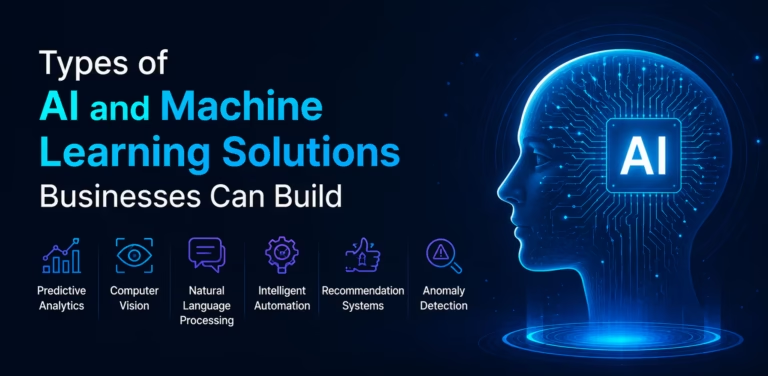
Related Blog:Types of AI and Machine Learning Solutions Businesses Can Build
Intelligent Document Processing
Many organizations spend significant time handling invoices, contracts, applications, forms, and other business documents. Intelligent document processing uses AI technologies such as optical character recognition (OCR) and machine learning to extract, validate, classify, and process information automatically. This reduces manual effort, improves accuracy, and accelerates document-driven workflows.
AI Chatbots and Virtual Assistants
AI-powered chatbots and virtual assistants help businesses automate customer interactions, answer common questions, provide support, and guide users through specific processes. Unlike traditional chatbots that rely on predefined responses, modern AI assistants can understand context, interpret natural language, and deliver more personalized experiences.
Predictive Analytics Automation
Predictive analytics solutions analyze historical and real-time data to identify patterns and forecast future outcomes. Businesses use these solutions to improve demand forecasting, customer retention, risk assessment, inventory planning, and strategic decision-making. By automating data analysis, organizations can gain actionable insights faster and with greater accuracy.
Workflow and Process Automation
AI-powered workflow automation streamlines business processes by reducing manual intervention and improving task coordination across teams. These solutions can automate approvals, notifications, case management, employee onboarding, compliance workflows, and other operational processes, helping organizations improve efficiency and consistency.
Computer Vision Automation
Computer vision enables AI systems to interpret and analyze images, videos, and visual data. Businesses use computer vision for quality inspection, facial recognition, inventory monitoring, security surveillance, medical imaging, and manufacturing automation. This technology helps organizations automate tasks that traditionally required human visual inspection.
Generative AI Solutions
Generative AI is transforming how businesses create content, process information, and interact with customers. Organizations are using generative AI to automate content creation, document summarization, knowledge management, customer support, software development assistance, and internal productivity workflows. As adoption grows, generative AI is becoming a key component of modern automation strategies.
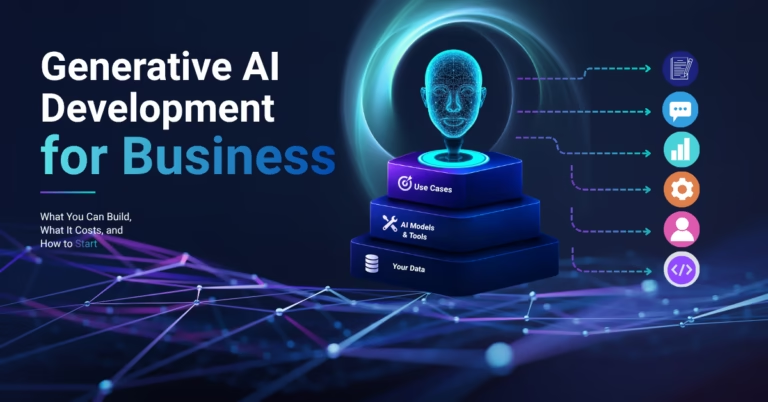
Explore More:Generative AI Development for Business: What You Can Build, What It Costs, and How to Start
How to Plan an AI Automation Project
Successful AI automation initiatives begin with a clear plan. While the technology itself is important, the long-term success of an automation project often depends on how well business objectives, processes, data, and implementation requirements are aligned from the start. A structured planning approach helps organizations reduce risks, control costs, and maximize the value of their AI investments.
Define Clear Business Objectives
The first step is identifying the problem the organization wants to solve. Whether the goal is reducing operational costs, improving customer experiences, accelerating workflows, or increasing productivity, clearly defined objectives provide direction for the entire project. Without measurable goals, it becomes difficult to evaluate success or calculate return on investment.
Assess Existing Processes and Workflows
Before implementing automation, businesses should analyze current workflows to understand where inefficiencies exist. Mapping processes helps identify bottlenecks, manual dependencies, and areas where AI can create the greatest impact. This assessment also ensures that automation improves workflows rather than simply replicating inefficient processes.
Evaluate Data Readiness
AI automation relies heavily on data quality and availability. Organizations should review existing data sources, assess data accuracy, and determine whether sufficient information is available to support AI models and automation workflows. Strong data foundations often lead to more reliable and effective automation outcomes.
Select the Right Technologies
Different business challenges require different AI technologies. Machine learning, natural language processing, computer vision, predictive analytics, and generative AI each serve unique purposes. Selecting the appropriate technology stack ensures the solution aligns with business requirements while supporting future scalability.
Establish Success Metrics
Organizations should define key performance indicators (KPIs) before development begins. Metrics such as processing time, operational costs, error rates, customer satisfaction, and productivity improvements provide a clear framework for measuring project performance and business impact.
Develop a Scalable Implementation Roadmap
Rather than automating every process at once, businesses often achieve better results by starting with a focused use case and expanding gradually. A phased implementation approach allows teams to validate results, optimize performance, and scale automation initiatives with greater confidence and lower risk.
How to Choose the Right AI Automation Solution
Selecting the right AI automation solution is one of the most important decisions in an organization’s automation journey. While many businesses recognize the value of automation, choosing the wrong solution can lead to unnecessary costs, implementation challenges, and limited returns. A successful AI automation strategy starts with understanding business needs and aligning technology investments with long-term objectives.
Align Automation with Business Goals
Before selecting a solution, organizations should clearly define what they want to achieve. Some businesses focus on reducing operational costs, while others prioritize improving customer experiences, accelerating workflows, or enhancing decision-making. Aligning automation initiatives with specific business objectives helps ensure measurable outcomes and long-term value.
Match the Solution to the Use Case
Different automation challenges require different AI capabilities. Businesses looking to automate customer interactions may benefit from AI chatbots and virtual assistants, while organizations handling large volumes of documents may require intelligent document processing solutions. Similarly, predictive analytics can support forecasting and planning, while workflow automation can streamline approvals and operational processes. Choosing the right solution for the right use case is critical to maximizing ROI.
Consider Integration and Scalability
AI automation solutions should work seamlessly with existing business systems, including CRM platforms, ERP software, accounting applications, and cloud infrastructure. Organizations should also consider future growth requirements and ensure that automation solutions can scale as workloads, users, and business processes evolve.
Partner with the Right AI Automation Experts
Implementing AI automation successfully requires both technical expertise and industry knowledge. With over 13 years of experience, a team of 30+ skilled developers, 135+ global clients, and expertise across 25+ industries, Bytexus helps businesses identify automation opportunities, select the right technologies, and develop custom AI solutions tailored to their unique requirements. From intelligent workflow automation and document processing to predictive analytics and generative AI applications, Bytexus delivers scalable solutions designed to improve efficiency, reduce operational costs, and support long-term business growth.
Key Technologies Used in AI Automation
Modern AI automation solutions are powered by a combination of technologies that enable systems to analyze data, understand information, make predictions, and automate decision-making. The choice of technology depends on the business problem being solved, the type of data involved, and the desired outcomes.
Machine Learning
Machine learning enables systems to learn from historical data and improve performance over time without being explicitly programmed for every scenario. Businesses use machine learning to automate forecasting, risk assessment, customer segmentation, fraud detection, and recommendation engines. By identifying patterns within large datasets, machine learning helps organizations make faster and more informed decisions.
Related Blog:Machine Learning Model Development: How Businesses Turn Data Into Intelligent Systems
Natural Language Processing (NLP)
Natural language processing allows computers to understand, interpret, and generate human language. This technology powers AI chatbots, virtual assistants, sentiment analysis tools, document classification systems, and intelligent search capabilities. NLP helps businesses automate communication-heavy processes while improving customer and employee experiences.
Explore More:NLP Software Development: How Natural Language Processing Is Transforming Business Operations
Computer Vision
Computer vision enables AI systems to analyze images, videos, and visual content. Organizations use computer vision for quality control, facial recognition, inventory management, security monitoring, medical imaging, and manufacturing inspections. This technology automates tasks that traditionally required human visual analysis.
Predictive Analytics
Predictive analytics combines artificial intelligence and data analysis to forecast future outcomes based on historical trends and real-time information. Businesses use predictive analytics to improve demand forecasting, identify risks, optimize inventory, predict customer behavior, and support strategic planning.
Generative AI
Generative AI is transforming business automation by creating content, generating insights, summarizing information, and assisting with decision-making. Organizations are using generative AI to automate content creation, customer support, document management, knowledge retrieval, and internal productivity workflows. As the technology continues to evolve, it is becoming an essential component of modern AI automation strategies.
Intelligent Workflow Automation
Intelligent workflow automation combines AI capabilities with business process automation to streamline end-to-end workflows. These solutions can route tasks, trigger actions, validate information, and coordinate activities across departments with minimal human intervention. The result is faster operations, improved consistency, and greater organizational efficiency.
Build vs Buy: Choosing the Right AI Automation Approach
One of the most important decisions businesses face when implementing AI automation is whether to build a custom solution or purchase an existing platform. The right approach depends on factors such as business requirements, budget, scalability needs, integration complexity, and long-term objectives.
When Off-the-Shelf Solutions Make Sense
Pre-built AI automation platforms offer a faster path to implementation and often require lower upfront investment. These solutions are typically designed to address common business needs such as customer support automation, workflow management, document processing, and analytics. For organizations with standard requirements and limited customization needs, off-the-shelf platforms can provide a practical starting point.
However, as business processes become more complex, organizations may encounter limitations related to customization, integrations, scalability, and data ownership. In many cases, businesses must adapt their workflows to fit the software rather than the software adapting to their workflows.
When Custom AI Automation Is the Better Choice
Custom AI automation solutions are designed around an organization’s specific processes, goals, and operational requirements. This approach provides greater flexibility, deeper integrations, and the ability to create unique workflows that support competitive advantages.
Businesses often choose custom development when they require industry-specific functionality, advanced data processing capabilities, enterprise-grade integrations, or highly specialized automation workflows. While custom solutions may require a larger initial investment, they typically offer greater long-term value and scalability.
Factors to Consider Before Making a Decision
The decision should be based on more than implementation costs alone. Businesses should evaluate their automation goals, growth plans, integration requirements, security needs, and future scalability expectations. Organizations that anticipate evolving processes or significant operational growth often benefit from a custom approach that can adapt as business needs change.
Finding the Right Balance
In some cases, a hybrid approach may provide the best outcome. Businesses can leverage existing automation platforms for standard workflows while developing custom AI capabilities for processes that require greater flexibility or strategic differentiation. This approach allows organizations to accelerate implementation while maintaining the ability to innovate and scale over time.
AI Automation Development Process
Building a successful AI automation solution requires more than selecting the right technology. It involves a structured development process that ensures the solution aligns with business objectives, integrates seamlessly with existing systems, and delivers measurable results. While every project is unique, most AI automation initiatives follow a similar implementation framework.
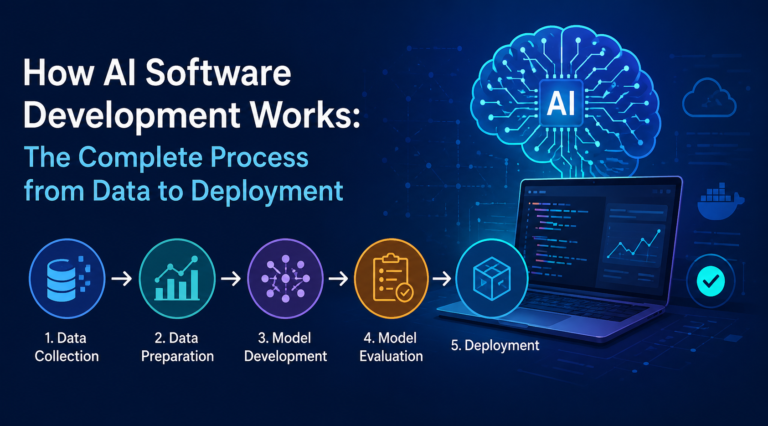
Read Next:How AI Software Development Works: The Complete Process from Data to Deployment
Discovery and Requirements Analysis
The process begins with understanding business goals, operational challenges, and automation opportunities. During this phase, stakeholders identify key workflows, define success criteria, and evaluate technical requirements. A thorough discovery process helps ensure the solution addresses real business needs rather than simply introducing new technology.
Data Collection and Preparation
Data is the foundation of every AI automation solution. Relevant business data is collected, organized, and prepared for analysis and model development. This stage often involves data cleansing, validation, and standardization to ensure the AI system can generate accurate and reliable results.
Solution Design and Architecture
Once requirements and data sources are established, the solution architecture is designed. This includes selecting AI technologies, defining workflows, planning integrations, and establishing security and compliance requirements. A well-designed architecture supports scalability, performance, and long-term maintainability.
AI Model Development and Integration
The development team builds and trains AI models while integrating automation capabilities into existing business systems. Depending on the use case, this may involve machine learning models, natural language processing, computer vision, predictive analytics, or generative AI components. Seamless integration ensures automation becomes part of everyday business operations.
Testing and Validation
Before deployment, the solution undergoes extensive testing to evaluate accuracy, reliability, performance, and security. Testing helps identify potential issues, validate business outcomes, and ensure the automation solution performs as expected under real-world conditions.
Deployment and Continuous Optimization
After successful testing, the solution is deployed into production environments. However, implementation is not the final step. Continuous monitoring, performance evaluation, and optimization are essential to ensure the system adapts to changing business requirements and continues delivering value over time.
By following a structured development process, businesses can reduce implementation risks, accelerate adoption, and maximize the long-term benefits of AI automation.
AI Automation Costs: What Businesses Should Expect
One of the most common questions businesses ask before starting an automation initiative is, “How much does AI automation cost?” The answer depends on several factors, including project complexity, data requirements, integrations, customization needs, and the technologies involved.
Project Complexity Plays a Major Role
Simple automation solutions, such as AI chatbots or basic document processing systems, generally require less development effort than enterprise-wide automation platforms. As workflows become more sophisticated and involve multiple business systems, development costs and implementation timelines typically increase.
Data and AI Requirements Influence Investment
The quality, volume, and availability of data can significantly impact project costs. Solutions that require advanced machine learning models, predictive analytics, computer vision, or generative AI capabilities often demand additional resources for data preparation, training, testing, and optimization.
Integration and Scalability Requirements Matter
Many businesses need AI automation solutions to connect with existing CRM platforms, ERP systems, accounting software, cloud infrastructure, or internal applications. The number and complexity of these integrations can influence both development effort and long-term maintenance requirements.
Security and Compliance Considerations
Organizations operating in regulated industries such as healthcare, finance, and insurance may require additional security controls, compliance measures, audit trails, and governance frameworks. These requirements can increase implementation costs but are essential for protecting sensitive business data.
Focus on Return on Investment
While implementation costs are an important consideration, businesses should also evaluate the long-term value of automation. A well-designed AI automation solution can reduce operational expenses, improve productivity, accelerate workflows, and enhance customer experiences. In many cases, the efficiency gains and cost savings generated over time outweigh the initial investment.
Rather than focusing solely on development costs, organizations should assess how automation supports business growth, operational efficiency, and competitive advantage. The most successful AI automation projects are those that deliver measurable business outcomes and create lasting value.
Challenges Businesses Face During AI Automation Implementation
While AI automation offers significant benefits, successful implementation requires careful planning and execution. Many organizations begin automation initiatives with high expectations but encounter challenges that can impact performance, adoption, and overall project success. Understanding these obstacles early helps businesses develop strategies to mitigate risks and maximize outcomes.
Poor Data Quality
AI systems rely on accurate and reliable data to generate meaningful results. Incomplete, outdated, or inconsistent data can reduce model accuracy and limit the effectiveness of automation. Organizations often need to improve data quality and establish governance practices before implementing AI-driven solutions.
Unclear Business Objectives
One of the most common reasons automation projects fail is the absence of clearly defined goals. Businesses that focus solely on technology rather than business outcomes may struggle to measure success or demonstrate value. Establishing specific objectives and performance metrics is essential for guiding development and evaluating results.
Integration Complexity
Most organizations operate multiple software systems across different departments. Integrating AI automation with existing applications, databases, and workflows can be challenging, particularly when legacy systems are involved. A well-planned integration strategy helps ensure seamless data flow and operational continuity.
Employee Adoption and Change Management
Successful automation is not just a technology initiative. It also requires organizational adoption. Employees may be hesitant to embrace new workflows or uncertain about how automation will impact their roles. Clear communication, training, and stakeholder involvement play an important role in driving adoption and maximizing the benefits of AI automation.
Security and Compliance Requirements
As businesses automate critical processes and handle larger volumes of data, security and compliance become increasingly important. Organizations must ensure that automation solutions meet industry regulations, protect sensitive information, and maintain appropriate access controls. Addressing these requirements from the beginning helps reduce risk and support long-term scalability.
Scaling Beyond Initial Success
Many businesses successfully automate a single process but struggle to expand automation across the organization. Without a scalable architecture and long-term strategy, growth can become difficult. Planning for future expansion from the outset helps organizations build a sustainable automation ecosystem rather than isolated solutions.
By recognizing these challenges early, businesses can develop realistic implementation strategies, reduce project risks, and improve the likelihood of achieving long-term success with AI automation.
Industry Examples of AI Automation
AI automation is transforming how organizations operate across industries. By automating repetitive tasks, improving decision-making, and enhancing operational efficiency, businesses are finding new ways to reduce costs and deliver better outcomes. While the specific use cases vary by industry, the goal remains the same: using intelligent automation to streamline processes and drive growth.
AI Automation in FinTech
Financial institutions are using AI automation to improve fraud detection, automate document verification, accelerate loan processing, and enhance risk assessment. By analyzing large volumes of transaction and customer data in real time, AI-powered systems help organizations improve accuracy while reducing manual effort and operational risk.
AI Automation in Healthcare
Healthcare providers are leveraging AI automation to streamline administrative workflows, manage patient records, automate appointment scheduling, and support clinical decision-making. These solutions help reduce administrative burdens, improve efficiency, and allow healthcare professionals to focus more on patient care.
AI Automation in Logistics and Supply Chain
Logistics companies use AI automation to optimize route planning, forecast demand, monitor shipments, and automate document processing. Intelligent systems can analyze operational data and identify opportunities to improve delivery performance, reduce transportation costs, and enhance supply chain visibility.
AI Automation in Manufacturing
Manufacturers are implementing AI automation to improve quality control, monitor equipment performance, and support predictive maintenance initiatives. By identifying potential issues before failures occur, organizations can reduce downtime, improve production efficiency, and optimize resource utilization.
AI Automation in Retail and E-Commerce
Retail businesses use AI automation to personalize customer experiences, manage inventory, automate customer support, and improve demand forecasting. These capabilities help organizations increase customer satisfaction while optimizing operational performance and profitability.
AI Automation in Education
Educational institutions and EdTech providers are adopting AI automation to streamline administrative processes, personalize learning experiences, automate assessments, and improve student engagement. These solutions help educators deliver more effective learning outcomes while reducing administrative workloads.
As AI technologies continue to evolve, businesses across industries are discovering new opportunities to automate complex processes, improve efficiency, and create competitive advantages through intelligent automation.
How to Choose the Right AI Automation Development Partner
The success of an AI automation initiative depends not only on the technology but also on the expertise of the development partner. Choosing the right AI automation company can significantly impact project outcomes, implementation timelines, scalability, and long-term return on investment. Businesses should evaluate potential partners based on their technical capabilities, industry experience, and ability to align solutions with business objectives.
Evaluate Technical Expertise
AI automation involves a combination of technologies, including machine learning, natural language processing, computer vision, predictive analytics, and workflow automation. A qualified development partner should have experience designing, developing, and deploying solutions across these areas while staying current with emerging AI advancements.
Look for Industry Experience
Every industry has unique operational challenges, regulatory requirements, and workflow complexities. A development partner with relevant industry experience can better understand business requirements, identify automation opportunities, and recommend solutions that align with specific operational needs.
Assess Customization and Integration Capabilities
Business processes are rarely identical across organizations. The right partner should be capable of developing custom AI automation solutions that fit existing workflows and integrate seamlessly with CRM platforms, ERP systems, cloud applications, and other business tools. Strong integration capabilities are essential for maximizing automation effectiveness.
Prioritize Security and Scalability
AI automation solutions often handle sensitive business and customer data. Organizations should ensure that their development partner follows security best practices and designs systems that can scale as operational requirements evolve. Security, compliance, and long-term maintainability should be considered from the beginning of the project.
Review Project Delivery and Support Processes
Successful AI automation requires more than development alone. Businesses should evaluate how potential partners manage project planning, implementation, testing, deployment, and ongoing optimization. Long-term support and continuous improvement are critical for ensuring automation solutions continue to deliver value as business needs change.
Selecting the right AI automation development partner helps organizations reduce implementation risks, accelerate deployment, and build solutions that support sustainable growth. A strategic technology partner brings both technical expertise and business insight, enabling companies to transform operations through intelligent automation.
Why Businesses Choose Bytexus for AI Automation Development
AI automation initiatives require more than technical expertise. Businesses need a development partner that understands operational challenges, industry requirements, scalability considerations, and long-term growth objectives. By combining deep technology expertise with a business-focused approach, Bytexus helps organizations design and implement AI automation solutions that deliver measurable results.
Expertise Across Modern AI Technologies
Bytexus develops intelligent automation solutions using technologies such as machine learning, natural language processing, computer vision, predictive analytics, and generative AI. Whether the goal is automating workflows, processing documents, improving customer experiences, or generating business insights, the team builds solutions tailored to specific operational requirements.
Custom Solutions Designed Around Business Needs
Every organization has unique processes, systems, and objectives. Instead of relying on one-size-fits-all approaches, Bytexus develops custom AI automation solutions that align with existing workflows, integrate seamlessly with business applications, and support future scalability. This enables organizations to maximize efficiency while maintaining flexibility as requirements evolve.
Industry Experience Across Multiple Sectors
With experience serving organizations across FinTech, Healthcare, Logistics, Manufacturing, Retail, EdTech, and other industries, Bytexus understands the challenges businesses face when adopting new technologies. This industry knowledge helps ensure that automation solutions address real business problems and deliver practical value.
A Focus on Long-Term Business Value
Successful AI automation is measured by outcomes, not just implementation. Bytexus works closely with clients to identify high-impact opportunities, establish measurable goals, and create solutions that improve productivity, reduce operational costs, and support business growth. This results-driven approach helps organizations achieve sustainable returns on their automation investments.
With over 13 years of experience, a team of 30+ skilled developers, 135+ global clients, and expertise across 25+ industries, Bytexus helps businesses transform operations through scalable and intelligent AI automation solutions.
Conclusion
AI automation is helping businesses transform how they operate by streamlining workflows, improving efficiency, and enabling smarter decision-making. From document processing and customer support to predictive analytics and intelligent workflow management, automation solutions are creating new opportunities for organizations to reduce costs, improve accuracy, and scale operations more effectively.
However, successful AI automation requires more than adopting new technology. Businesses must identify the right processes, establish clear objectives, select appropriate technologies, and develop solutions that align with long-term operational goals. A strategic approach helps ensure automation initiatives deliver measurable value and sustainable results.
As AI capabilities continue to evolve, organizations that invest in intelligent automation today will be better positioned to improve productivity, respond to changing market demands, and maintain a competitive advantage. By focusing on high-impact opportunities and implementing solutions that support business growth, companies can unlock the full potential of AI automation and drive long-term success.
Frequently Asked Questions
What is AI automation in business?
AI automation uses artificial intelligence technologies to automate tasks and workflows that typically require human effort, decision-making, or analysis. Businesses use AI automation to improve efficiency, reduce manual work, increase accuracy, and streamline operations.
How does AI automation differ from traditional automation?
Traditional automation follows predefined rules and workflows, while AI automation can analyze data, recognize patterns, learn from information, and adapt to changing conditions. This allows AI systems to automate more complex and decision-based processes.
Which business processes are best suited for AI automation?
Processes that involve repetitive tasks, large volumes of data, manual document handling, customer interactions, workflow approvals, and operational bottlenecks are often strong candidates for AI automation.
What technologies are used in AI automation solutions?
AI automation solutions commonly use machine learning, natural language processing (NLP), computer vision, predictive analytics, generative AI, and intelligent workflow automation technologies to improve business operations.
How much does AI automation cost?
The cost of AI automation depends on factors such as project complexity, data requirements, integrations, customization needs, and security considerations. Businesses should focus on the long-term value and return on investment rather than implementation costs alone.
How long does it take to implement an AI automation solution?
Implementation timelines vary depending on project scope and complexity. Smaller automation projects may take a few weeks, while enterprise-level solutions involving multiple integrations and advanced AI capabilities may require several months.
Should businesses build a custom AI automation solution or buy an existing platform?
The right approach depends on business requirements. Off-the-shelf platforms can provide faster deployment for common use cases, while custom AI automation solutions offer greater flexibility, scalability, and alignment with unique business processes.
What are the benefits of AI automation for businesses?
AI automation can improve productivity, reduce operational costs, minimize errors, accelerate workflows, enhance customer experiences, strengthen decision-making, and support long-term business growth.